• Facebook
  • Google+
  • Linkedin
  • Twitter

Aris Industries

586-725-8100

  • Home
  • About Us
    • Company
    • Qualifications
  • What We Do
    • Site Safety
    • Industrial Solutions
    • Consulting
    • Industrial Safety News
  • Contact
  • Dynamic Solutions by Industrial Professionals

COSEN SAWS Launches MechaLogix Cosen Predictive Computing – A Cloud Based Machine Monitoring Technology.

October 5, 2015 By Jason Eelbode

Cosen Saws, a leading global manufacturer of industrial band saws, has introduced MechaLogix Cosen Predictive Computing – a cloud based system that revolutionizes the category with an innovative feature that monitors the performance of a blade and can accurately forecast the number of remaining cutting hours left before a saw blade dulls and is no longer cutting with precision or a complete breakage.

-Advertisement-


googletag.pubads().definePassback(‘/11436865/Test300x250’, [300, 250]).display();

“Know the unknown – now you can,” said Joshua Sun, Business Development Manager for Cosen Saws. “This completely changes the game for cloud based machine monitoring systems. “Our customers have told us how important it is for them to minimize waste and scrap. Having a blade fail in the middle of a cut is one of the primary causes of waste and scrap and it negatively impact profits.”

“With our technology, both operators and management will know the remaining useful life on a band saw blade” Mr. Sun added. “Gone are the days of tracking machine hours and accumulated cutting area. Now you have advance knowledge of the days and hours before a replacement saw blade is required. That’s what MechaLogix Cosen Predictive Computing does.”

COSEN - MechaLogixMechaLogix also gives you real time performance data and can report issues like excessive vibration, overheating and changes in fluid line pressure. The root cause of an issue is reported in real time which equates to minimal down time and more efficient operations.

The technology is intuitive and user customizable. Adjustable alert notification settings work seamlessly with the mobile app. “We have been delighted with the enthusiastic response from our customers who have partnered with us during the course of the program”, said Mr. Sun.

The first public demonstration of MechaLogix takes place at EMO MILANO from October 5-10th, 2015. On November 9-12th, the unveiling of the product in the United States will happen at the Fabtech 2015 trade show being held at McCormick Place in Chicago, IL.

The comprehensive program includes:

Blade Life Assessment
Monitoring and alert notification of a saw blade’s remaining useful life.   The technology will provide advance notice of required saw blade replacement.

Increased Machine Efficiency & Machine Life
Our technology provides real time analysis of individual components and overall machine health status. It can send notification of abnormal conditions from motors and bearings. It also alerts on frequent consumable items like hydraulic and cutting fluid.

Increased Operational Efficiency
Our technology can provide production reports to aid in identifying best practices and training needs. Our advanced monitoring and notification system alerts the operation when machine maintenance is needed which aids efficiency in the scheduling of planned events.

For more information, please visit:
www.MechaLogix.com


About Cosen:

Since its establishment in 1976, Cosen has continued its growth into one of the world’s largest professional band saw manufacturers. Today, Cosen manufactures over 100 models of saws sold to all five continents including Germany and Japan. Cosen’s markets have expanded internationally to over 80 countries through authorized distributors for the metal cutting industry.

-Advertisement-


googletag.pubads().definePassback(‘/11436865/Test300x250’, [300, 250]).display();

For more information, please visit:
www.cosen.com 

Or contact:
news@cosensaws.com
1-877-729-4641

-Advertisement-

googletag.pubads().definePassback(‘/11436865/Top_Banner’, [[728, 90], [468, 60]]).display();

The post COSEN SAWS Launches MechaLogix Cosen Predictive Computing – A Cloud Based Machine Monitoring Technology. appeared first on Industrial Machinery Digest.


Full article: COSEN SAWS Launches MechaLogix Cosen Predictive Computing – A Cloud Based Machine Monitoring Technology.
Source: Industrial Machinery Digest

Filed Under: Industrial Safety News Tagged With: Industrial

OSHA finds improperly equipped furnace led to deadly explosion at TIMET's Morgantown, Pennsylvania, manufacturing plant

October 4, 2015 By Jason Eelbode

Oct. 5, 2015 OSHA finds improperly equipped furnace led to deadly explosion at TIMET’s Morgantown, Pennsylvania, manufacturing plant MORGANTOWN, Pa. – A 27-year-old furnace worker was killed in an ex

Full article: OSHA finds improperly equipped furnace led to deadly explosion at TIMET’s Morgantown, Pennsylvania, manufacturing plant
Source: OSHA News Release

Filed Under: Industrial Safety News Tagged With: Industrial

Charleston roofing contractor cited after worker hospitalized for heat-related illness while working at State Capitol Complex

October 4, 2015 By Jason Eelbode

Oct. 5, 2015 Charleston roofing contractor cited after worker hospitalized for heat-related illness while working at State Capitol Complex Employer name: Tri-State Roofing and Sheet Metal Co., PO Box

Full article: Charleston roofing contractor cited after worker hospitalized for heat-related illness while working at State Capitol Complex
Source: OSHA News Release

Filed Under: Industrial Safety News Tagged With: Industrial

OSHA finds fragrance manufacturer exposes employees to safety and health hazards in Piscataway, New Jersey

October 4, 2015 By Jason Eelbode

Oct. 5, 2015 OSHA finds fragrance manufacturer exposes employees to safety and health hazards in Piscataway, New Jersey Ambrosia Fragrance LLC fined more than $67K for federal workplace violations Em

Full article: OSHA finds fragrance manufacturer exposes employees to safety and health hazards in Piscataway, New Jersey
Source: OSHA News Release

Filed Under: Industrial Safety News Tagged With: Industrial

Worker's hand injected with fluid during machine maintenance at Calhoun, Georgia, rubber mat manufacturer

October 4, 2015 By Jason Eelbode

Oct. 05, 2015 Worker’s hand injected with fluid during machine maintenance at Calhoun, Georgia, rubber mat manufacturer OSHA cites Apache Mills Inc. for 9 violations; $51K in proposed penalties CALHO

Full article: Worker’s hand injected with fluid during machine maintenance at Calhoun, Georgia, rubber mat manufacturer
Source: OSHA News Release

Filed Under: Industrial Safety News Tagged With: Industrial

Judge affirms OSHA citations against Alabama auto parts supplier following the amputation of a temporary worker's hand and fingers

October 4, 2015 By Jason Eelbode

Oct. 5, 2015 Judge affirms OSHA citations against Alabama auto parts supplier following the amputation of a temporary worker’s hand and fingers Date of Action: Sept. 29, 2015 Type of Action: Decision

Full article: Judge affirms OSHA citations against Alabama auto parts supplier following the amputation of a temporary worker’s hand and fingers
Source: OSHA News Release

Filed Under: Industrial Safety News Tagged With: Industrial

OSHA cites Brooklyn contractor for fatal worker fall

October 4, 2015 By Jason Eelbode

U.S. Department of Labor | Oct. 6, 2015 BOS 2015-186 OSHA cites Brooklyn contractor for fatal worker fall J&M Metro General Contracting Corp. fails to provide lifesaving protections NEW YORK – Vi

Full article: OSHA cites Brooklyn contractor for fatal worker fall
Source: OSHA News Release

Filed Under: Industrial Safety News Tagged With: Industrial

Rethinking Medical Device Production

October 3, 2015 By Jason Eelbode

Rethinking Medical Device Production

Stryker, manufacturers of medical technology and surgical devices, has always placed a fundamental value on developing innovative products and services that ultimately improve the lives of patients. They offer a diverse array of medical technologies, including reconstructive, medical, surgical, and neuro-technology and spine products to help people lead a more active life.

To provide minimally-invasive equipment and high-quality products, it is essential to acquire the best technology for production. To meet these objectives, they chose to use ESPRIT, a computer-aided-manufacturing (CAM) software that comes equipped with a full-spectrum programming system that is compatible with various machine tool applications.

StrykerThe History of Stryker
Stryker was founded in 1941 by Dr. Homer Stryker, an orthopedic surgeon from Kalamazoo, Michigan. Today, Stryker employs 25,000 people across 60 sites and distributes its products in more than 120 countries. The parts and services they produced range from joint, prosthesis, implants and surgical navigation systems, to endoscopy and emergency room equipment. Without a doubt, everyone at Stryker is working hard to achieve the same mission.

However, when it comes to the production process, each manufacturing site operates differently to fulfill the various needs of their customers. Before using ERSPRIT, Stryker Spine in Bordeaux, France was creating parts for spinal surgery using manual programming, plus several shaping and finishing tools. With five buildings and 330 employees, the French subsidiary is in charge of the entire chain of manufacturing, from design to expedition of the finished parts. With a high-pressure job of producing parts that people rely on for the rest of their lives, Stryker Spine in France was ready to revolutionize their process of production.

The workshops are composed of latest models of turning machining centers and machine tools such as Mazak Integrex, or DMG DMU. These machines produce plates for the cervical and lumbar spine from titanium, spacers or brackets from PEEK, as well as instruments and bone screws. It’s clear that the manufacturer’s expertise is based on precision, controlling free-form surfaces and materials that are difficult to machine, by overcoming numerous manufacturing difficulties.

A Time for Change
In 2006, the decision makers of Stryker decided to welcome ESPRIT into their world and have seen a vast improvement in their overall production and the quality of their products ever since.

Stryker”We appreciated this CAM software package that is easy to use and which offered all the applications: turning, Swiss style machining, milling, wire EDM” said Franck Duru, Methods Technician at Stryker.

Both the Stryker headquarters and the subsidiary in China have been using ESPRIT since 1997, which only made the decision to switch to ESPRIT that much easier. After the implementation of ESPRIT, in collaboration with the R&D and Quality Departments, production in the workshops progressed towards continuous 5-axis machining and free forms. Stryker was able to produce very complex parts and high-precision instruments.

There was even a rethink in the way they designed their parts, because of all the possibilities ESPRIT was providing for them. “We strive to program quickly by always reusing existing cycles; but also to simplify by families of parts, thinking about all the others that will come after, because sometimes only the dimensions are different” said Duru.

With 13 software licenses, they mainly use ESPRIT 3D programming option, as well as pattern recognition for certain products. At Stryker in Switzerland, they specialize in orthopedic implants, and operate machines using the programs developed in France with ESPRIT CAM.

Improvements Made Possible with Esprit
“Nothing is flat on this part, and it must be made as thin as possible so it is tolerated by the patient” said Duru, when describing a plate for a lumbar implant. “The bottom of the part is even more complex. It took me a day of programming, but without the tools provided by ESPRIT, the work would have taken several weeks. There were several stages involved in the process of 5-axis continuous machining such as, high-speed roughing with the new ProfitMilling cycle, composite milling for a better surface quality, contouring, tapping, spot facing, etc.

”ProfitMilling technology has made open-pocket machining of the uncut material and contouring of the freestanding part possible” said Nicolas Marsault, Director of Usiprog and distributor of ESPRIT. “It is a real time-saver and saves wear and tear on the tools.”

Originally, the part is designed using a computer-aided-design (CAD) software from PTC. Through the ESPRIT Feature Exchange, the CAM software gathers the entire structure from the CAD software with all the details of the part. The transmission of data is smooth and programming is more accurate.

StrykerSeeking to Innovate
Stryker is the only manufacturer to produce entire surgical parts from PEEK, such as the spacers placed between vertebrae before fixing plates, or brackets to block tendons. The details are minuscule and the material complicated to machine, due to the risk of burrs.

“The products come out of the robot cells in one day, whereas, before the process was automated, it took 8 days” said Cédric Lassus Debat, Machine Operator at Stryker. “The parts come out finished, sanded, engraved and ready to be shipped. The machining is done on a Realmeca turning machine and the titanium marker is inserted with ESPRIT. A robot collects the part and engraves it, then moves it to a sanding cell.”

Optimizing Programming
The availability of Visual Basic (VBA) development tools in ESPRIT enables more automation and safety. For example, through the development of a specific add-in, tool data in the interface is collected in one click, and an equipment report is made for the workshop. “Before they were entered by hand” said Duru. For parts which required 20 tools, it would take one or two hours. More than 90% of the time has been saved because checking and errors are avoided”.

Taking Advantage of the Esprit Network
The strong support provided by ESPRIT reseller Usiprog and DP Technology has contributed to the success of Stryker. Furthermore, cooperation between the software publisher and the machine builders means that licenses tailored to the machines and certified post-processors are provided.

“The post-processors provided by Usiprog are effective from installation” added Duru. The time saving is huge — more than 30%. Because Stryker chose standard post-processors from DP Technology, programmers have not needed to completely develop post-processors internally. Even when programming modifications for a new part, the risk of error is almost zero”.

Stryker’s reputation in the medical world and their two-figure growth can certainly be explained by demographic trends, but mostly by enormous effort and investment in the right technology. ESPRIT Knowledge-Base Machining is the next step for the Stryker engineering team as they continuously strive to exceed their goals of production. ESPRIT KBM provides a push-button approach, which enables programmers and operators to determine the best method for machining. A real expert production system, its purpose is to decrease overall production costs while increasing productivity.

With technology being a crucial aspect of producing precision parts, Stryker Spine is thankful to have a powerful CAM software in their corner.

For more information, please visit:
www.dptechnology.com

Or contact:
esprit@dptechnology.com

The post Rethinking Medical Device Production appeared first on Industrial Machinery Digest.


Full article: Rethinking Medical Device Production
Source: Industrial Machinery Digest

Filed Under: Industrial Safety News Tagged With: Industrial

Long Lasting Relationships in Manufacturing

October 3, 2015 By Jason Eelbode

LongTerm Relationships in Manufacturing

From manual equipment to CNC machining to lights out manufacturing,
Dial Machine’s relationship with OEMs spans 50 years

LongTerm Relationships in ManufacturingWhile longevity – measured as years in business with consistent ownership – is not a typical requirement for OEMs in choosing a precision metal parts manufacturer, there are some significant reasons why it should be considered along with the usual quartet of quality, delivery, turnaround and price.

Longevity does impart certain, undeniable facts. In an era where many machine shops have gone out of business or changed hands as parts manufacturing moved overseas, those that have survived could only do so by being lean and delivering consistent value.

Often, this meant adapting by moving to more precision, low tolerance work that remained in the U.S. To win this business, shops were forced to recruit or retrain skilled operators from a diminishing pool while continually investing in the latest CNC equipment over time. This meant spending more money to stay ahead of the curve when many jobs were becoming “lowest bid wins.”

For industries that are more price-sensitive, competition amongst the quality shops was fierce and the only way to stay in business was to deliver consistent quality, on time – every time. Fail do so, and another precision shop is there to take its place.

In other words, longevity – particularly when measured in decades – is like a gauntlet that only the strong survive. Not many can lay claim to being in business for the past 20, 30, 40 or more years.

50 years in business, 50 year customer

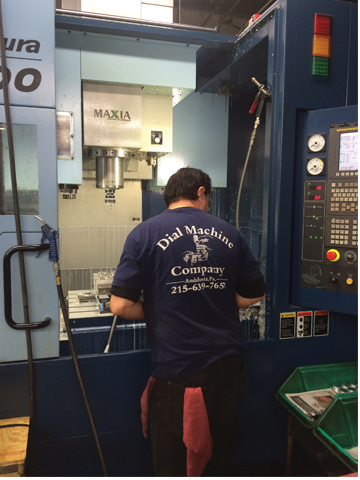
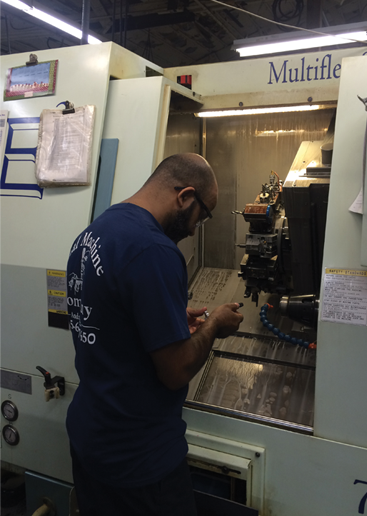
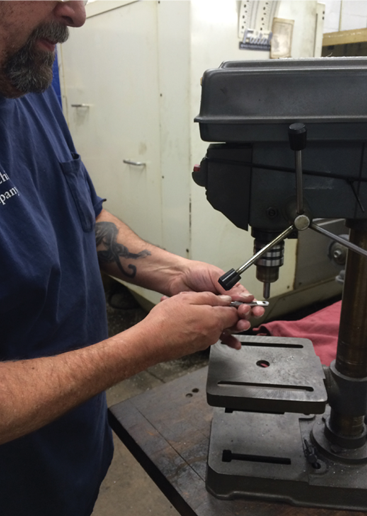
One metal parts supplier able to negotiate the rigors of the industry, and of time, is Dial Machine Company (dialmachine.net), a full service precision machine shop offering custom metal and plastic components. The company has operated under the same family ownership and retained long term skilled operators for the past 50 years.

If the company’s 50-years in business is impressive, perhaps more so is that Dial Machine has maintained a continuous 50-year relationship with the same customer, King Tester Corporation, a pioneer of Brinell hardness testing equipment.

LongTerm Relationships in ManufacturingGiven the failure rate of manufacturers, revolving door ownership or management (often that make sweeping changes, including where they get their parts), changes in the industry, competitors looking to steal away business by offering a lower price, any machine shop will acknowledge that retaining a customer over decades is perhaps even tougher than staying in business.

The relationship between these two companies is unusually long for its time frame and cooperation. During that time, they have witnessed many changes in the industry, most notably the introduction and evolution of CNC machining.

“In the 1980s, machining had reached its limits, with rising quality demands and many skilled machinists retiring,” says Ernest Biddle, King Tester’s V.P. of Sales and Marketing. “Dial Machine was our first supplier to use CNC machines to enhance and extend quality machining. We supported this technical revolution and co-signed their loan for CNC equipment, because fast, accurate production of our test head was critical to our business.”

Since 1965, Dial Machine has been the primary parts supplier for the King portable Brinell hardness tester, providing parts for its hydraulic test head, body, and base. Dial handles not only primary processes such as CNC machining, metal fabrication, lathe and milling operations, but also secondary machining, finishing, coating, deburring, grinding, and some assembly.

Biddle acknowledges the role of John Giordano, co-owner of Dial Machine and son of its founder Anthony, in helping to produce the world’s first commercially viable, automatic Brinell microscope, King Tester’s King Scan®, which since 1987 has gone through a number of iterations and improvements.

Despite the role that longevity can play in an OEM choosing an experienced metal parts manufacturer, simply being around a long time isn’t enough when it comes to precision parts. With each new generation of CNC equipment, the precision and speed increases and companies such as Dial Machine must continue to invest in new machines while refining their techniques.

“On key parts of our portable Brinell hardness tester, such as the process of making test heads, Dial Machine works to very tight tolerances,” says Simon Focht, King Tester’s Operations Manager. “From a raw casting, a block of stainless steel, it essentially machines the exterior and interior in fine detail. At another point, it machines and drills a block of aluminum, using CNC equipment to achieve several tasks at the same time.”

Recently, Giordano also suggested design improvements to tighten the mating fit between two elevating screws and nuts on the King Brinell hardness tester base. “With the improved tolerance of the custom mating fit, the carriage runs up and down as precisely as possible with increased longevity,” says Focht.

Staying Current

LongTerm Relationships in Manufacturing“A machine shop has to prove itself every day,” agrees Jim Guba, Vice President of Engineering at IMAC Systems. His company, which has worked with Dial Machine for the past 5 years, provides products and services to the gas measurement and precision machining industry since its establishment in 1978. “They continue to improve their business and bring in the latest, state-of-the-art CNC equipment.”

Although IMAC Systems has invested in sophisticated CNC equipment – including two new CNC lathes totaling $500,000 to add to two CNC lathes, a milling machine, and a machining center – it still sees the value of outsourcing its most complex parts to a precision shop like Dial Machine.

Although they could manufacture the parts, they prefer to use in-house equipment to make the majority of less-complex parts – a job that requires the full attention of their current long-time CNC operator.

The complex parts Dial Machine makes include the upper and lower housings of a high-pressure stainless steel filter, which protects expensive downstream gas equipment from dangerous line debris. The tolerances for the high-pressure filter can range from 0.0005” to 0.005” in 316” stainless steel.

“We’ve never had a reject from any part they’ve made for us in five years,” says Guba.

Lights Out Manufacturing

Despite Dial Machine’s long, successful OEM relationships, the company is not resting on its laurels. To gain even greater operational efficiency, it has gone beyond CNC machining to lights out manufacturing.

Lights out manufacturing is a trend where CNC equipment is set up to make parts overnight or longer, while staff is not around. This can speed part turnaround while also reducing labor costs, which can be passed on to the customer.

The technique often improves OEM production flexibility as well, leaving fully manned CNC equipment for day shifts to produce more complex parts that may require more tooling changeovers and monitoring.

As much as 80% of the work Dial Machine performs can be run as lights out manufacturing, provided that lot quantities are sufficient. These automated machines have automatic magazine bar feeders and safety mechanisms on them. This allows the company to run multiple shifts per day, including an unattended overnight shift, which can dramatically decrease OEM lead times and part costs.

“With CNC and lights out manufacturing capability as well as expert machinists, Dial Machine is helping to keep our company on the cutting edge of quality, delivery, and price,” concludes Biddle.

For more information, please visit:
www.dialmachine.net

Or contact:
dialmachoffice@verizon.net 

The post Long Lasting Relationships in Manufacturing appeared first on Industrial Machinery Digest.


Full article: Long Lasting Relationships in Manufacturing
Source: Industrial Machinery Digest

Filed Under: Industrial Safety News Tagged With: Industrial

Reduce Overhead with Energy Storage Technology

October 2, 2015 By Jason Eelbode

EnegyStorageTechnologyHeader2

ShoEi Foods USA, Inc. operates a major food processing operation. Nearly 1,000 acres of prunes and walnuts are handled annually at the Olivehurst, California facilityy. In addition to its processing plant, the business requires energy intensive refrigerated warehouses that operate around-the-clock.

Knowing that improved energy management would directly impact the bottom line, as well as underscore the company’s commitment to sustainability, ShoEi’s executive team began a search for the best solutions to reduce energy use. They originally looked to solar, and engaged Cenergy Power after a competitive solicitation. When Cenergy Power saw ShoEi’s energy profile they knew a combined solar-storage solution would help ShoEi save more than solar alone.

A Creative Approach to Access Lower Rates
Cenergy partnered with Stem to scope out a combined solar-storage energy management system for ShoEi. As Stem’s team of energy consultants reviewed the company’s energy profile, they identified a lucrative opportunity for ShoEi to apply Stem’s software plus storage solution to modify their energy profile and qualify for a more cost-effective rate plan.

For businesses, electric bills include two main components: energy charges, based on the total amount of energy used during the month, and demand charges, which are based on the maximum amount of energy used at any one time during the month. Businesses that can consistently keep their maximum demand under a certain level, decreasing their energy provider’s cost to serve them, can switch to a more advantageous rate plan. By integrating solar to offset daytime energy use and storage to lower demand charges and stay under the specified limit, ShoEi would save an estimated $6,000 per month.

Stem proposed the rate switch plan to ShoEi, and shortly after, Stem and Cenergy Power were awarded the project.

Software & Storage: An  Effective Line of Defense
In order to move to the preferable rate class, ShoEi would have to stay below the qualifying maximum demand level of 500kW for one full year. Stem’s real-time software added a level of precision to ShoEi’s operations that proved critical to maintaining consistent control over energy usage.

“Real-time is key, especially when every 15-minute interval counts. If you have one 15-minute interval in a month that exceeds maximum demand for your current rate, it’s a strike against you. If you get three strikes in consecutive months, batterySidebaryou’re back up to the higher rate immediately,” said Dwight Davis, ShoEi Foods USA’s facility and plant manager.

To begin integrating its energy management technology into ShoEi’s daily operations, Stem first activated its software to help ShoEi gain better visibility into the facility’s energy usage. The software enabled ShoEi to understand the energy impacts of specific equipment, identify patterns, and make adjustments to smooth usage peaks throughout the day.

Next, Stem installed its storage system. The software and battery work in concert to lower ShoEi’s maximum demand: when the software detected a spike in energy usage that would cause ShoEi to exceed the 500kW demand threshold, it automatically sent a text message notifying ShoEi facility managers, who could then choose to reconfigure operations and reduce demand. Concurrently, Stem’s storage units automatically released stored energy, which bought more time for the team to make the necessary adjustments.

A Complex Cost Reduction Strategy Made Simple
With precise planning and close cooperation with Stem’s team of energy consultants, ShoEi was able to switch to a more cost-effective rate in the minimum possible time— one year.

“We told Stem what we wanted to achieve and they made it happen: Stem’s software collected the data that was needed to make a plan precise enough to hit our goal. When we finally cleared the mark and moved down to the lower rate, we actually jumped for joy. Now we save about $6,000 per month as a result,” said Mr. Davis.

“Stem’s storage acts as a first line of defense,” said Mr. Davis. “It gives us time to make adjustments that ultimately make or break ou  r ability to meet the requirements for the lower rate.” The Stem system automatically produces savings and also provides ShoEi’s team with valuable insight into its energy data.

“Now that we understand our energy patterns, I don’t feel like I have to monitor the system every day to know that our energy usage is in check. I try to look at least once a week, though I don’t normally need to.” Mr. Davis commented.

Persistent Savings Despite Facility Expansion
A few months after successfully switching to the new rate class, ShoEi made large-scale facility upgrades to increase their overall throughput and increased their horsepower by more than 50 percent, threatening to push them over the 500kW limit. Stem worked closely with ShoEi to refine the system and help them optimize operations to stay below the threshold, despite the near doubling of energy flowing through the facility. With Stem’s software and storage as a safety net, ShoEi has successfully maintained its current rate tier without a single misstep.

“Stem was up for the challenge. They’re problem solvers and we knew they could make the rate switch work for us even with the new facility. We had confidence in the people, and in the software. Not just any energy management software could do this, but we knew Stem’s could. This scenario proves that with Stem’s technology, you can do more with less,” said Mr. Davis.

For more information, please visit:
www.stem.com. 

The post Reduce Overhead with Energy Storage Technology appeared first on Industrial Machinery Digest.


Full article: Reduce Overhead with Energy Storage Technology
Source: Industrial Machinery Digest
Filed Under: Industrial Safety News Tagged With: Industrial

« Previous Page
Next Page »

Company Info

PO Box 380145, Clinton Township, MI 48038
Phone: 586-725-8100
Fax: 586-569-2504

Join Our Mailing List

  • This field is for validation purposes and should be left unchanged.

News Feed

    Sorry, no Tweets were found.

Copyright © 2026 Aris Industries